Ebook Download Aquinas's Theory of Natural Law: An Analytic Reconstruction
Getting this publication in this web site may not lead you to stroll and also go to book store. Looking for rack by shelf will truly invest your time mainly. But, it well not assurances you to be effective finding Aquinas's Theory Of Natural Law: An Analytic Reconstruction Hence, you can find it in the soft file of this book. It will provide you the remarkable system of the book suggestion. You could see the link and also most likely to the web page making handle. And currently, your book look data of this can be your picked publication and area to read this fascinating book.
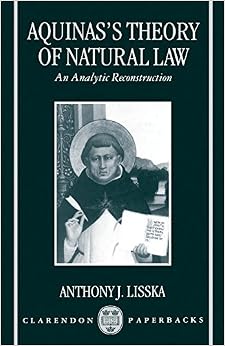
Aquinas's Theory of Natural Law: An Analytic Reconstruction

Ebook Download Aquinas's Theory of Natural Law: An Analytic Reconstruction
Program your great task to make your life look far better. Wait, not only look far better however exactly wonderful adequate! Are you assuming that many individuals will be so appreciated of you who have good behaviors? Of course it can be one of the benefits that you could obtain when having that type of hobbies. And also currently, just what concerning reading? Is his your hobby? Well, checking out publication is uninteresting, will you assume that so? Actually, that's not.
Just how can? Do you believe that you don't require adequate time to choose buying publication Aquinas's Theory Of Natural Law: An Analytic Reconstruction Never mind! Simply rest on your seat. Open your kitchen appliance or computer as well as be online. You can open up or see the link download that we provided to obtain this Aquinas's Theory Of Natural Law: An Analytic Reconstruction By this way, you could get the on-line e-book Aquinas's Theory Of Natural Law: An Analytic Reconstruction Reviewing the e-book Aquinas's Theory Of Natural Law: An Analytic Reconstruction by on the internet could be actually done conveniently by saving it in your computer system and gizmo. So, you can proceed each time you have totally free time.
Related to this situation, you can really have the time to take Aquinas's Theory Of Natural Law: An Analytic Reconstruction as so as feasible. Be just one of the wonderful individuals that take this publication also for source. For guaranteeing you to get this publication, we will certainly demonstrate how you can locate and obtain the soft documents of it right here. Simply adhere to the link that we offer as well as you can directly find as well as make deal to get this publication. This is just picked to obtain and also wait in some gadget that you bring everywhere or in your home or office.
When someone needs to know something, this book will probably help to discover the answer. The reason reading Aquinas's Theory Of Natural Law: An Analytic Reconstruction is a have to is that it will provides you a brand-new means or much better method. When a person aims to make an initiative to be success in certain thing, it will certainly aid you to recognize just how the thing will certainly be. Well, the simple means is that you could obtain entailed directly to act in your life after reading this publication as one of your life sources.
This new critique of Aquinas's theory of natural law presents an incisive, new analysis of the central themes and relevant texts in the Summa Theologiae which became the classical canon for natural law. Professor Lisska discusses Aquinas's view of ethical naturalism within the context of the contemporary revival and recovery of Aristotelian ethics, arguing that Aquinas is fundamentally Aristotelian in the foundations of his moral theory. The book looks at the historical development of natural law themes in the twentieth century, and in particular demonstrates the important connections between Aquinas and contemporary legal philosophers. The book should be of considerable interest to scholars of jurisprudence as well as philosophers.
Your recently viewed items and featured recommendations
›
View or edit your browsing history
After viewing product detail pages, look here to find an easy way to navigate back to pages you are interested in.
Product details
Paperback: 336 pages
Publisher: Clarendon Press (February 19, 1998)
Language: English
ISBN-10: 0198269676
ISBN-13: 978-0198269670
Product Dimensions:
8.4 x 0.8 x 5.3 inches
Shipping Weight: 1.1 pounds (View shipping rates and policies)
Average Customer Review:
3.7 out of 5 stars
3 customer reviews
Amazon Best Sellers Rank:
#1,856,997 in Books (See Top 100 in Books)
I'm a legal scholar preparing to write a book on contract theory from a realist perspective, inspired by Gordley's work on the "philosophical origins of modern contract doctrine." I had not been able to find anything that introduced in a sophisticated way the metaethics of Aquinas and Aristotle on natural law. I finally found this book, exactly what I was looking for. Lisska is almost too careful and it makes the book somewhat plodding, but he makes up for it with the clarity of his style. I hardly know what to say to the critic below who claims Lisska simply falls prey to the naturalistic fallacy. He spends at least the better part of two chapters on it. I wished he had spent less time on it and more time on Kripke and Nelson and their respective metaphysics. I'm giving this book 5 stars instead of 4 because it is the only book I could find on its essential (a little pun there) topic after much searching.
I really feel obliged to disagree with the panning review given above. I am a professional philosopher myself, and while I ultimately would reject natural law theory as a basis for ethics, for many of the problems with it which Lisska identifies and vainly struggles to overcome in his book, I was very impressed by the book itself. I think Lisska situates contemporary natural theory within the various debates over law and ethics over the last century, identifies the key "metaphysical" problem with the theory, namely, its reliance upon the concept of all humans sharing a common nature or essence, and puts forward a reasonable and hardly extravagent functional alternative to Aristotelian essences as a possible basis for furhter natural law theorizing.No, I was not ulimtatley convinced by the book, but I was very impressed with its clarity and it sophistication. Unlike the other review, this is one of the few books on Aquinas which I would not part with. Someone with an interest in what makes Aquinas a perenially interesting philosopher should buy the other reviewer's copy--I already own one or I would!
The first, fifty-five pages are given over to ubiquitous promises the author intends to make good in the last two-hundred-and-fifty pages, and doesn't. These promises allude to precursors of natural law in its many variegated forms, some of which are not really "natural law" principles at all. Most of the discussion is about how some contemporary Thomists and neo-Thomists have approached the issue, but the reader cannot follow the subtle nuances of this discussion without knowing the meaning of natural law at the outset. The exposition of a reconsidered natural law follows this meandering, often uninteresting, introduction. In another confusion, the author discusses the impact of Moore's naturalistic fallacy on natural law before he describes what Aquinas' "natural law" is. So, over a hundred pages are heuristically inverted, leaving the reader to ponder future promises and anticipate an argument before he knows even the meanings of the terms of the argument drawn. If I did not already possess knowledge of Aquinas' natural law theory, these pages would have been meaningless; as it is, I found the points they may have been trying to make arcane, discursive, and near solipsistic.Lisska insists upon ten fundamental principles necessary to serve the function of adopting Aquinas' natural law theory. Four of these principles require we accept "essences," a medieval concept wholly foreign in modern philosophy. A fifth principle requires "truth" as a correspondence theory between mind and things (see, Searle, "Construction of Social Reality" for why this is no longer so). The other principles insist that (6) metaphysics of morals is possible, (7) that reason takes precedence over the affective will, &c. In other words, one has to adopt the medieval, which is to say the Aristotlean, metaphysical schema in order for a "modern reconstruction" of Aquinas' natural law to succeed. Lisska writes, "In Aquinas's ontology, the dispositional paradigm holds only for temporal essences" (87), and again, "Divine commands must be in accord with the rational demands of the eternal law" (ibid), but it is precisely those very preconditions that makes Aquinas' natural law inimical to contemporary philosophy in the first place. I don't "see" what Lisska means by an "analytical reconstruction." His writing is the most circumlocutious writing on Thomistic natural law as one can find; it would be better to assimilate it from the source: "Summa Theologica," I-II, q. 90-97, esp. q. 94.Finally, by page 107, we attain Lisska's definition of the natural law: "Because the end itself determines the well-functioning of the human person. The disposition has, as a part of its very nature, a tendency towards a specific end. This end, when realized, contributes to the well-being of the individual. This is the crux of natural law theory. Nature has `determined', as it were, the ends which lead to the well-being of the individuals of the natural kind." From this nexus, the rest is downhill, as Lisska then evaluates how different scholastic and neo-scholastic philosophers of this past century have adapted this explication into their working-definitions. It's a tremendous bore, not at all enlightening, and of relative useless speculation on its applicability today. If it weren't for Robert George's excellent work in the field, I would have tossed natural law theory out the window. The book is that bad.I routinely buy from Oxford University Press based on their unparalleled quality of authors and editors. How this travesty passed its high editorial standards is deeply puzzling. I have highlighted only some of my disappointments with this book, but overall it is one of the worst books I've read in the field of theology, philosophy, or anthropology. My copy is for sale.
Aquinas's Theory of Natural Law: An Analytic Reconstruction PDF
Aquinas's Theory of Natural Law: An Analytic Reconstruction EPub
Aquinas's Theory of Natural Law: An Analytic Reconstruction Doc
Aquinas's Theory of Natural Law: An Analytic Reconstruction iBooks
Aquinas's Theory of Natural Law: An Analytic Reconstruction rtf
Aquinas's Theory of Natural Law: An Analytic Reconstruction Mobipocket
Aquinas's Theory of Natural Law: An Analytic Reconstruction Kindle